
What researchers found
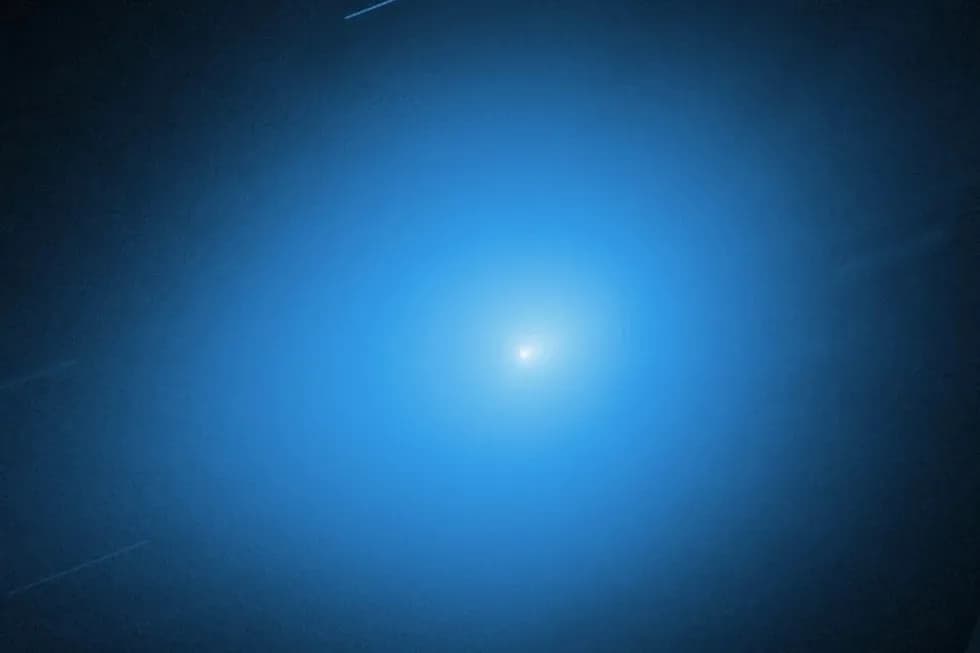
An interstellar comet originating from beyond our solar system has made its closest approach to Earth while maintaining a vast and safe distance, drawing significant interest from astronomers eager to study one of the rare visitors from another star system, as such objects provide invaluable insights into the formation and composition of planetary systems far beyond our own, with scientists using ground-based and space telescopes to analyze its trajectory, speed, chemical makeup, and interaction with solar radiation, noting that unlike typical comets bound by the Sun’s gravity, interstellar comets follow hyperbolic paths that confirm their origin outside the solar system and their eventual departure back into interstellar space, making observation windows brief and scientifically precious.
While experts emphasize that despite public fascination, the comet poses absolutely no threat to Earth due to its immense distance, which is measured in tens of millions of miles, and its rapid velocity that prevents gravitational capture, as researchers focus on detecting gases released from its nucleus, studying dust composition, and comparing these findings with known solar system comets to identify similarities and differences that could reveal how common certain materials are across the galaxy, with early observations suggesting a composition shaped by conditions around another star, potentially offering clues about temperature, radiation exposure, and chemical processes in distant planetary systems.
Why it matters
While the comet’s behavior as it interacts with the Sun’s heat helps scientists understand how such objects survive long journeys through interstellar space where they are exposed to cosmic rays, extreme cold, and long periods without stellar warmth, and astronomers also see this event as an opportunity to refine detection methods, since spotting interstellar objects requires advanced sky surveys capable of identifying fast-moving bodies with unusual trajectories, a challenge that future observatories like the Vera C.
Rubin Observatory are expected to address more effectively, increasing the likelihood of discovering more interstellar visitors in the coming decades, as each detection helps build a broader statistical picture of how frequently material is exchanged between star systems, supporting theories that planets and comets may play a role in distributing organic compounds across the galaxy. While public interest in the comet highlights humanity’s enduring curiosity about the universe and our place within it, reminding scientists and enthusiasts alike that even distant cosmic travelers can deepen our understanding of planetary science, stellar evolution, and the interconnected nature of cosmic systems, all while quietly passing by Earth without disruption before continuing their long journey back into the depths of interstellar space.