


What researchers found
NASA’s ambitious Psyche mission reached a major milestone this week as the spacecraft, traveling through deep space on a six-year journey to a rare metal-rich asteroid, prepared for a close flyby of Mars that will provide a critical gravitational boost and an important opportunity to test its scientific instruments. The robotic spacecraft, also named Psyche after the asteroid it is pursuing, is scheduled to swing past Mars at a speed of about 12,333 miles per hour (19,848 kilometers per hour), using the planet’s gravity to alter and accelerate its trajectory toward the asteroid belt located between Mars and Jupiter.
During the flyby, the spacecraft will pass within approximately 2,800 miles (4,500 kilometers) of the Martian surface, a remarkably close encounter in planetary exploration terms and roughly equivalent to the distance separating the east and west coasts of the United States. Mission scientists view the maneuver as both a navigational necessity and a scientific opportunity because all of Psyche’s instruments will be activated during the encounter, allowing engineers and researchers to calibrate equipment, test observation strategies, and gather valuable data before the spacecraft reaches its final destination in 2029. NASA has also coordinated simultaneous observations involving the agency’s Mars rovers and a fleet of American and European orbiters currently studying the red planet, enabling scientists to compare data collected from multiple vantage points.
Psyche’s onboard cameras have already begun capturing images of Mars during the approach phase, initially showing the planet as a crescent shape and later as a nearly full globe once the spacecraft passes by. According to Arizona State University scientist Jim Bell, who leads the mission’s imaging team, the pictures serve a dual purpose: helping operators fine-tune the spacecraft’s instruments while also producing visually stunning images of Mars from a rarely seen perspective. Beyond the excitement of the Mars flyby lies the mission’s true objective, the asteroid Psyche, one of the most unusual objects in the solar system. Unlike the majority of asteroids, which are composed primarily of rock or ice, Psyche is believed to contain exceptionally high concentrations of metal, especially nickel and iron.
Why it matters
The asteroid itself is enormous, measuring roughly 173 miles long and 144 miles wide (278 kilometers by 232 kilometers), and has a distinctive irregular, potato-like shape. Scientists suspect that Psyche may actually be the exposed metallic core of an early planet-like body that formed during the chaotic beginnings of the solar system more than 4.6 billion years ago. According to this theory, violent collisions with other large objects stripped away the asteroid’s rocky outer layers, leaving behind what may essentially be the fossilized heart of a failed planet. If this hypothesis proves correct, studying Psyche up close could provide scientists with unprecedented insight into how planets form and evolve.
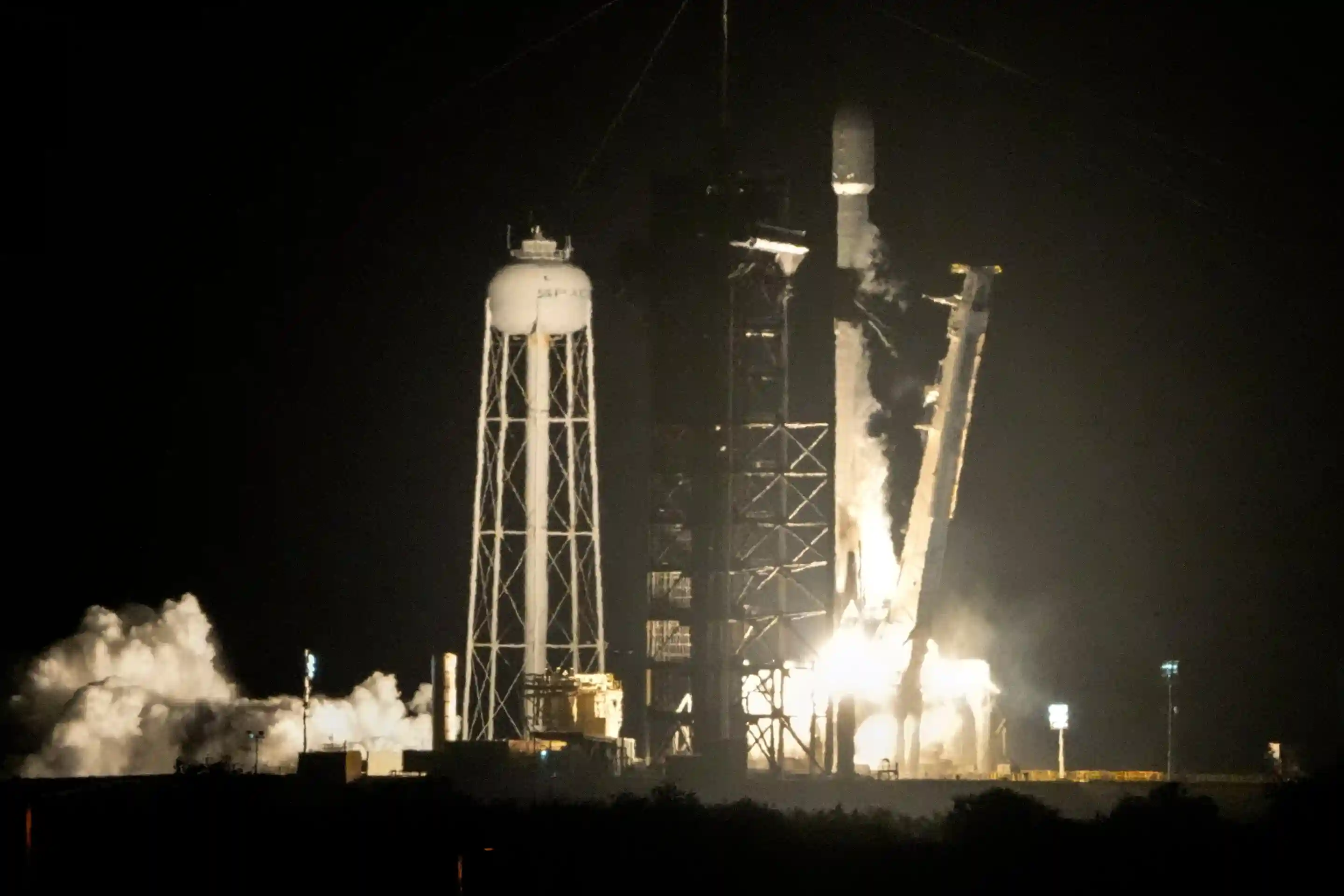
Researchers hope the mission will reveal clues about the processes that shaped Earth and the other rocky planets, including how metallic cores develop and how planetary differentiation occurred in the early solar system. Understanding these processes could also shed light on why Earth eventually became capable of supporting life while many other planetary bodies did not. The spacecraft itself represents a significant technological achievement. Roughly the size of a van, Psyche was launched in October 2023 and relies on advanced solar electric propulsion rather than conventional chemical rockets for most of its journey. Its propulsion system uses solar panels to generate electricity that powers xenon gas thrusters, which produce a gentle but highly efficient continuous thrust over long periods of time.
This technology allows the spacecraft to travel vast distances using relatively small amounts of fuel, making it ideal for deep-space missions. The journey to the asteroid belt is intentionally indirect, with the Mars gravity assist designed to reshape the spacecraft’s path and conserve propulsion resources. Once Psyche arrives at the asteroid in 2029, it will gradually enter orbit and spend approximately two years conducting detailed observations. During that phase, the spacecraft will map the asteroid’s surface, analyze its composition, measure its magnetic properties, and study its internal structure using a suite of sophisticated scientific instruments.
During that phase, the spacecraft will map the asteroid’s surface, analyze its composition, measure its magnetic properties, and study its internal structure using a suite of sophisticated scientific instruments.
Questions that remain
Researchers are especially interested in determining whether Psyche still retains traces of an ancient magnetic field, which would support the idea that it was once part of a larger planetary body with a molten metallic core. The mission also carries broader implications for future space exploration and scientific understanding. Metal-rich asteroids like Psyche are extremely rare, making the mission the first attempt to explore such an object directly. The data collected could reshape theories about planetary formation and reveal details about the violent collisions that dominated the early solar system. In addition, studying metallic asteroids may eventually have practical applications for future resource utilization in space, as such bodies could contain vast quantities of valuable metals.
For now, however, NASA emphasizes the mission’s scientific goals, focusing on uncovering the origins of planets and improving humanity’s understanding of the building blocks of the solar system. The Mars flyby marks a critical midpoint in the mission and serves as a reminder of the complexity and precision required for interplanetary exploration. Every maneuver, observation, and calibration during the encounter helps prepare the spacecraft for its historic rendezvous with one of the solar system’s most mysterious objects. As Psyche continues its journey deeper into space, scientists and engineers hope the mission will ultimately answer long-standing questions about how planets form, how their interiors evolve, and how the chaotic environment of the early solar system shaped the worlds that exist today.