


What the report says
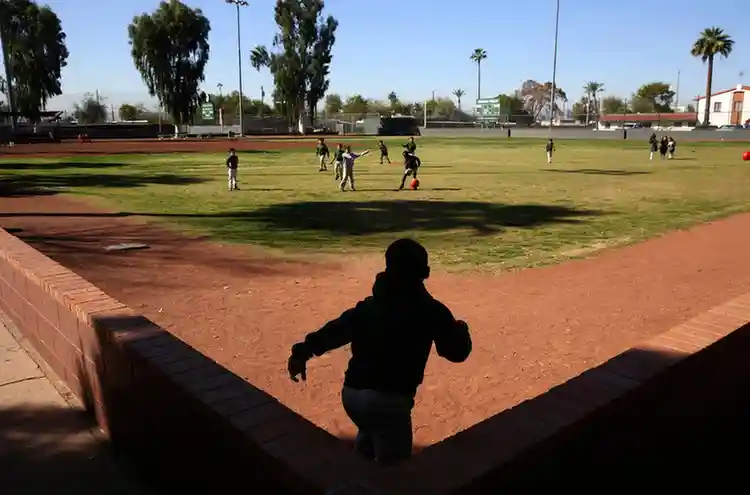
Recess is typically considered as just a break in the school day, a time when kids can relax, play games, and step away from the classroom. But health experts say it is considerably more crucial than most people realize. Recess is a crucial factor in promoting children’s mental, physical, emotional and academic well-being, according to a newly updated policy statement released by the American Academy of Pediatrics. The group recently released its first revised recommendations on recess in almost a decade, emphasizing that unstructured recreation should be protected for students of all ages, not just for preschoolers and students in elementary school.
Over the years, pediatricians have seen recess come under increasing threat in schools, because of academic pressure, tight schedules and the growing emphasis on test performance. In an effort to boost scores and achieve educational benchmarks, several schools have cut back on the free time pupils get during the school day. But experts now caution that taking away recess may actually hurt pupils rather than help them achieve. Free play has always been important for children but it has been gradually squeezed out of schools, said Dr Robert Murray, one of the primary writers of the amended guidance. “If you give kids enough time to use it properly, recess has powerful benefits,” he said.
The new recommendations, published in the journal Pediatrics, build on earlier suggestions but also incorporate fresh science that explains why breaks are required for healthy brain development and learning in the classroom. Children can’t concentrate for long amounts of time without breaks, researchers warn. The brain takes time to comprehend, store and recall knowledge therefore allowing students to take pauses between courses helps them to do just that. This implies that recess could really boost academic achievement, not detract from it. The new guidance also says recess helps with social and emotional development in ways a classroom may not always provide. Free play teaches children how to communicate, cooperate, solve issues and create friendships.
Health context
This helps children to gain confidence and independence and to learn how to deal with obstacles together with others. Experts say these benefits are not just essential for younger children, but for middle school and high school kids, too. Breaks during the school day are just as vital for older students as they are for younger children, as older students still encounter emotional stress, social pressure and academic obligations. The pediatrician’s argument is that adolescents still need opportunities to walk about, relax and engage with classmates outside of the classroom environment. Another significant reason experts support recess is physical activity. Health professionals say the increase in childhood obesity continues, with roughly one in five children and teens in the U.S. affected.
Recess allows children to move around, play sports, walk, and be active during the day. Doctors believe that regular physical activity can improve fitness, promote healthy growth and reduce health risks connected with inactivity. In recent years, youngsters have spent more and more time indoors and on screens, especially with the rise of cellphones, video games and internet entertainment. As a result, the options for play and exercise outside have narrowed. Pediatricians suggest recess can counter this trend by getting kids to move rather than sitting for hours at desks or in front of digital devices. The revised recommendations are quite clear that recess should never be withheld as punishment or academic grounds.
Many schools punish students by taking away recess if they misbehave, don’t do their work or struggle academically. But experts say those pupils who have trouble are often the ones who need recess the most. “Children who are struggling with stress and behavioral issues, or having difficulties focusing, often find great benefit in physical activity and free play,” Dr. Murray said. Students who lose recess may get more frustrated, less motivated and might have a difficult time concentrating when they return to class. Pediatricians say schools should seek for different ways to discipline children without taking away their opportunities to rest and recharge. Research also suggests that recess has significantly reduced in schools across the United States in the previous two decades.
Research also suggests that recess has significantly reduced in schools across the United States in the previous two decades.
What readers should know
Since the mid-2000s, many school districts have cut back on recess time or removed it altogether. Data collected by Springboard to Active Schools in conjunction with the U.S. Centers for Disease Control and Prevention shows that as many as 40 percent of school districts limit recess during this time. Today, the quantity of recess pupils get varies drastically from school to school. Some kids get fewer than 10 minutes of free time a day and some students get over an hour. Older pupils often get shorter breaks than younger children or none at all. Experts suggest pupils should ideally have at least 20 minutes of recess a day, plus a few brief breaks between courses.
In several countries around the world, this is already the case. For example, in Denmark, Japan and the United Kingdom, pupils usually have breaks after 45 to 50 minutes of classroom instruction. Health professionals say these regular breaks allow pupils to vent, boost their concentration and return to the classroom rejuvenated. Dr Murray said students need ample time to ‘blow off steam’ and ready themselves mentally for the following lesson. Short or quick breaks may not have the same benefits as longer, more substantial periods of free exercise. Dr. Lauren Fiechtner, a childhood obesity specialist at Mass General Brigham for Children in Boston, was happy with the amended advice and said recess is still important for children of all ages.
She had no role in developing the recommendations, but said she had experienced the positive impact of recess firsthand, both as a doctor and a parent. Her son, 8, first learnt how to play basketball at school during recess and subsequently fell in love with the game, she said. “Outdoor play is important for older children,” said Fiechtner, especially as teens spend more time with screens and technological devices. She says recess gives youngsters a chance to get outside, move and connect with others in healthier ways. Pediatricians’ new recommendations offer a clear message to schools, teachers and parents: recess is not a waste of time. Instead, it is a crucial feature of healthy child growth and good learning.