

What researchers found
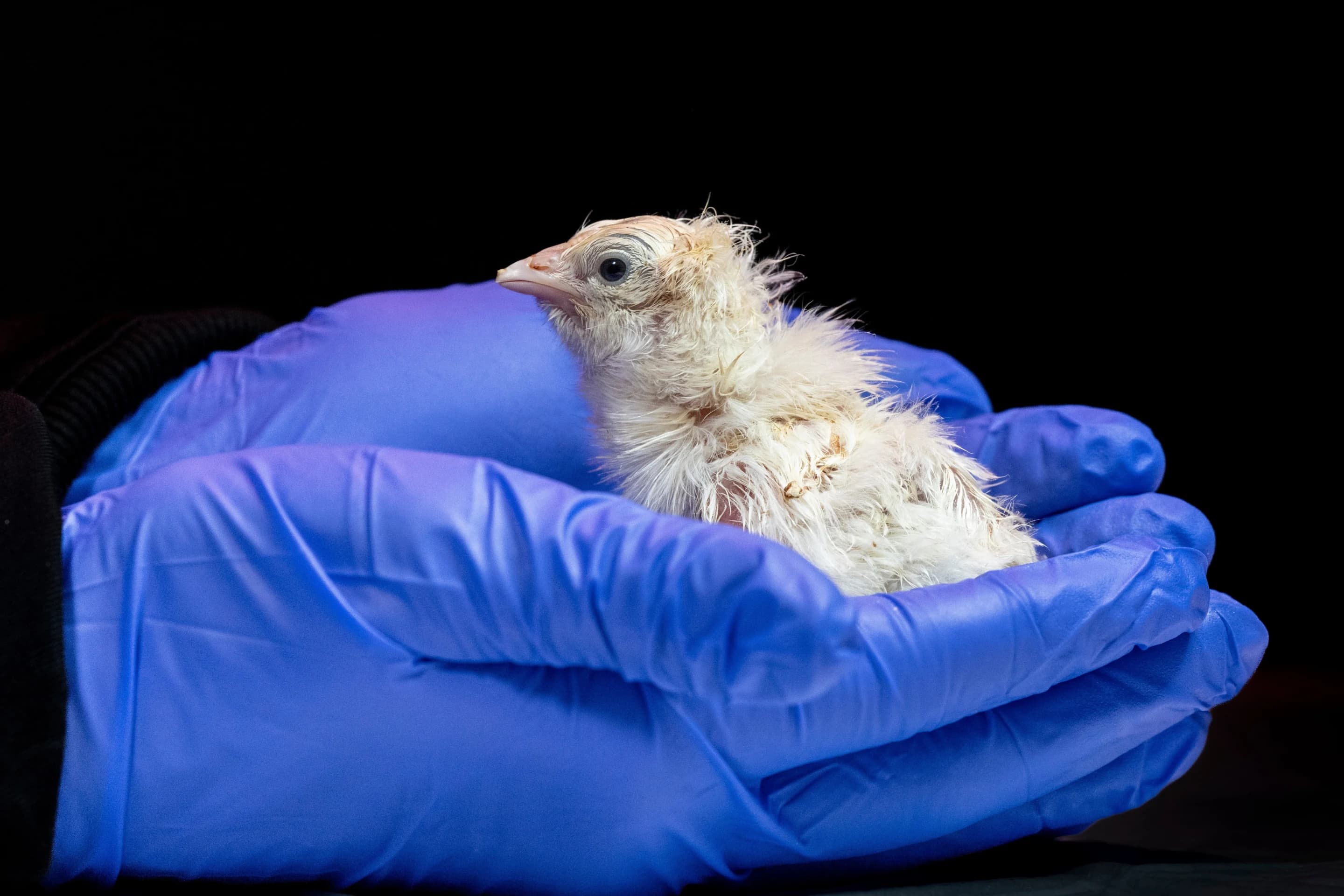
Colossal Biosciences, a biotechnology company focused on de-extinction science, has announced a major scientific breakthrough after successfully hatching live chicks from a fully artificial eggshell environment. The company revealed that 26 healthy chicks were born using a specially engineered shell-like incubation system designed to mimic the biological functions of a natural egg. The achievement represents a significant advancement in reproductive biotechnology and could eventually support efforts to revive extinct bird species such as the South Island giant moa and the dodo. The artificial eggshell system was developed using a 3D-printed lattice structure combined with a bioengineered membrane that regulates oxygen exchange similarly to a real eggshell.
Scientists involved in the project explained that one of the biggest challenges in avian embryo development is maintaining the correct balance of oxygen, humidity, nutrients, and calcium throughout the incubation process. Traditional shell-less incubation methods often failed because embryos either received too much oxygen or lacked the necessary structural conditions to develop properly. Colossal says its new design solves many of these problems by recreating a more natural and stable developmental environment while also allowing researchers to monitor embryo growth in real time. Unlike conventional eggs, the artificial system is transparent, making it easier for scientists to observe developmental stages without disturbing the embryo. During the experiment, fertilized chicken embryos were carefully transferred into the artificial shell system and incubated under controlled laboratory conditions.
Calcium and nutrient support were added externally because these are normally supplied through a natural eggshell. According to the company, the chicks hatched successfully and have continued to show healthy growth and normal behavior after birth. The development has sparked widespread discussion in the scientific community because of its potential applications in conservation biology, genetic engineering, and de-extinction research. Colossal Biosciences believes the technology could eventually make it possible to incubate genetically edited embryos of extinct birds whose eggs are too large or biologically complex for modern surrogate species. One of the company’s long-term goals is reviving the giant moa, a massive flightless bird from New Zealand that went extinct hundreds of years ago.
Why it matters
Since no living bird species can naturally lay or incubate moa-sized eggs, the artificial shell system could become an essential tool for any future attempt to recreate moa-like animals using advanced gene-editing technology. The company has also linked the breakthrough to broader conservation efforts. Researchers say the artificial eggshell system could help endangered bird species with low reproductive success by improving hatch rates and reducing dependence on fragile natural nesting conditions. Scientists working in wildlife conservation may eventually use similar systems to preserve rare avian species, protect vulnerable embryos, and study developmental biology more effectively. However, the announcement has also received criticism and skepticism from several independent experts.
Some scientists argue that the technology should technically be described as an artificial eggshell rather than a complete artificial egg because other important biological components still come from natural embryos. Critics also say that creating genetically modified animals similar to extinct species does not truly qualify as de-extinction because the resulting organisms would not be genetically identical to the original extinct animals. Evolutionary biologists have pointed out that reconstructing ancient genomes remains extremely difficult due to incomplete DNA samples and millions of years of evolutionary divergence between extinct and modern species. Ethical concerns have also emerged around the future of de-extinction science. Some researchers question whether resources should be focused on reviving extinct animals instead of protecting endangered species that still exist today.
Others worry about the ecological consequences of introducing genetically engineered animals into modern ecosystems that have dramatically changed since the extinction of species like the moa or dodo. Despite the debate, many experts agree that the artificial incubation technology itself is a meaningful scientific accomplishment with valuable research applications beyond de-extinction. Colossal Biosciences has gained global attention over the past few years for ambitious projects involving woolly mammoths, dire wolves, thylacines, and other extinct creatures. The company combines genetic engineering, reproductive science, synthetic biology, and conservation research in an effort to develop technologies capable of restoring lost traits from extinct animals.
The company combines genetic engineering, reproductive science, synthetic biology, and conservation research in an effort to develop technologies capable of restoring lost traits from extinct animals.
Questions that remain
While critics remain cautious about the company’s public claims, supporters believe innovations such as the artificial eggshell system could accelerate breakthroughs in developmental biology and species preservation. The successful hatching of live chicks demonstrates that engineered incubation systems can support healthy avian development outside traditional eggs, opening new possibilities for future research. Scientists say more peer-reviewed studies and independent verification will be necessary before the technology can be fully evaluated by the broader scientific community. Even so, the experiment marks an important milestone in synthetic reproductive science and highlights how rapidly biotechnology is evolving.
Whether the technology ultimately contributes to de-extinction, endangered species recovery, or entirely new forms of assisted reproduction, the artificial eggshell breakthrough is likely to become one of the most discussed developments in modern genetic science.