

What happened
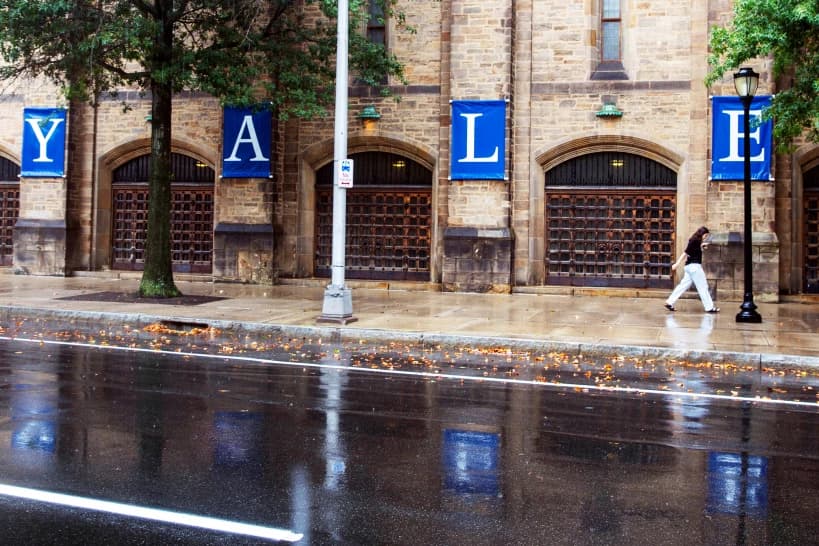
The U.S. Department of Justice on Thursday accused Yale University of illegally considering race in admissions decisions at its School of Medicine, marking the second major university to face such allegations this month. The accusation comes as the Trump administration continues to intensify scrutiny of affirmative action practices in higher education following the 2023 U.S. Supreme Court ruling that banned race-conscious college admissions. In a letter addressed to Yale’s legal representatives, Assistant Attorney General for Civil Rights Harmeet Dhillon said a Justice Department investigation found that Black and Hispanic applicants had significantly higher chances of being admitted to Yale’s medical school than white or Asian applicants with similar or stronger academic credentials.
According to the DOJ, Black students in recent incoming classes had lower average GPAs and standardized test scores compared to white and Asian students who were admitted. “Yale has continued its race-based admissions program despite the Supreme Court and the public’s clear mandate for reform,” Dhillon said in a statement. She added that the Justice Department would continue investigating universities that allegedly violate federal anti-discrimination laws. Yale responded by defending its admissions system, stating that the School of Medicine follows a rigorous and holistic evaluation process. The university said its students demonstrate “exceptional academic achievement and personal commitment” and emphasized that graduates often become leaders in medicine, research, and public service. Yale also noted that it would review the DOJ’s letter carefully.
Why it matters for students and schools
The Justice Department alleged that Yale violated Title VI of the Civil Rights Act of 1964, which prohibits discrimination on the basis of race in federally funded institutions. The department is seeking a voluntary resolution agreement with the university but warned it could pursue legal action if Yale fails to comply. According to the DOJ, data from Yale’s medical school admissions for the classes of 2023, 2024, and 2025 showed significant disparities in acceptance outcomes. For the most recent incoming class, Black students reportedly had a median GPA of 3.88 and median MCAT scores in the 95th percentile, while Asian students had a median GPA of 3.98 and white students had a 3.97 median GPA.
Both Asian and white students reportedly scored in the 100th percentile on the MCAT. The DOJ claimed that Black applicants were at times up to 29 times more likely to receive interview invitations than similarly qualified Asian applicants. Federal officials also criticized Yale’s use of holistic admissions practices, arguing they allowed race to continue influencing admissions decisions indirectly. The department pointed to Yale’s earlier legal arguments in the Students for Fair Admissions case against Harvard and the University of North Carolina, where the university argued it could struggle to maintain diversity without considering race explicitly. DOJ officials said Yale’s ability to maintain diverse student classes after the Supreme Court ruling suggests the university may have continued unlawful race-based practices.
DOJ officials said Yale’s ability to maintain diverse student classes after the Supreme Court ruling suggests the university may have continued unlawful race-based practices.
What to watch
The case is part of a broader national debate over affirmative action and diversity policies in higher education. Last week, the Justice Department issued similar allegations against University of California, Los Angeles regarding admissions practices at its medical school. Meanwhile, a coalition of 17 Democratic state attorneys general filed a lawsuit in March challenging a Trump administration policy requiring universities to provide evidence that race is not being considered in admissions decisions. The latest developments highlight growing tensions between universities seeking to maintain diverse student populations and federal officials enforcing the Supreme Court’s ban on affirmative action.