






science • Dec. 17, 2025
NASA loses contact with its Maven spacecraft orbiting Mars for the past decade
NASA has temporarily lost contact with its MAVEN spacecraft, which has been orbiting Mars for more than a decade and providing critical insights into the planet’s atmosphere and climate evolution.

By Betty D. Chambers
Published Dec. 17, 2025
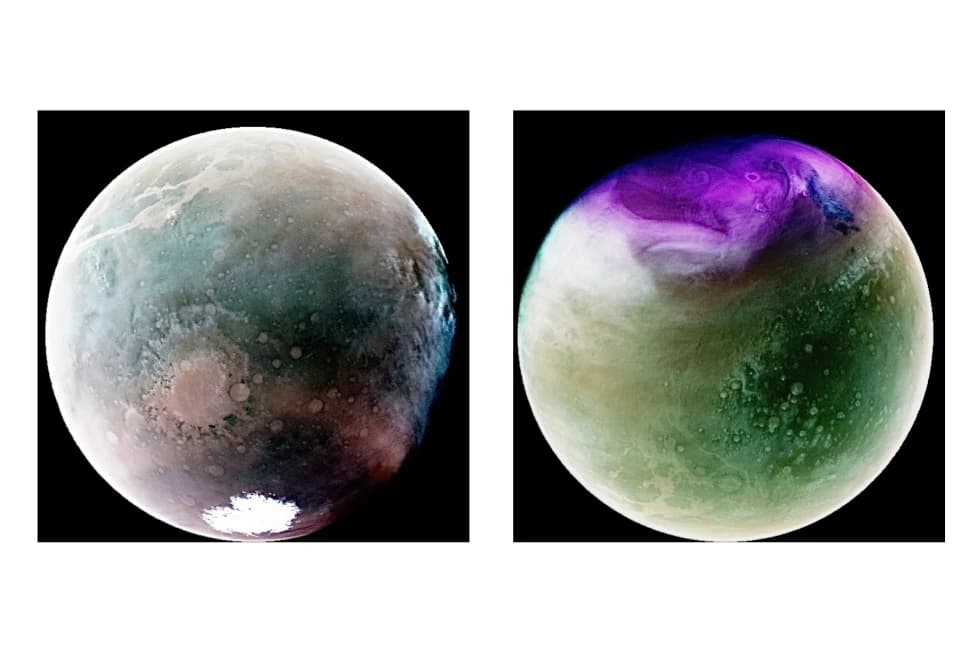
NASA has reported a temporary loss of communication with the Mars Atmosphere and Volatile EvolutioN (MAVEN) spacecraft, a long-running mission that has been orbiting Mars for over ten years and has played a vital role in advancing scientific understanding of the Red Planet’s atmospheric history, with engineers working to diagnose the issue and reestablish contact as MAVEN continues to follow its programmed orbit around Mars, while the agency notes that such communication interruptions, though concerning, are not unprecedented for deep-space missions operating in harsh and distant environments, as MAVEN was launched in 2013 to study how Mars lost much of its atmosphere over billions of years, a process believed to have transformed the planet from a once warmer and wetter world into the cold, arid environment observed today, and throughout its mission the spacecraft has delivered groundbreaking data on solar wind interactions, atmospheric escape, and the role of space weather in shaping planetary climates, significantly influencing current models of Mars’ evolution, while the recent loss of contact has prompted NASA teams to initiate standard recovery procedures, including sending repeated commands, analyzing telemetry history, and coordinating with the Deep Space Network to listen for any signal that could indicate the spacecraft’s status, as officials stress that MAVEN was operating normally prior to the communication gap and that the spacecraft was designed with autonomous systems capable of maintaining safe operations even without immediate contact from Earth, allowing it to manage power, thermal conditions, and orientation while ground teams work to restore communications, and although the exact cause of the outage has not yet been confirmed, possible explanations range from software issues and antenna orientation problems to space weather effects or hardware degradation after years of continuous operation in Mars orbit, highlighting the technical challenges of maintaining spacecraft far from Earth over extended periods, while scientists and mission managers emphasize the mission’s remarkable longevity and success, noting that MAVEN has far exceeded its original prime mission timeline and continues to be a cornerstone of Mars atmospheric research, supporting not only its own science objectives but also aiding other Mars missions by providing space weather context that helps protect orbiters, landers, and rovers operating on and around the planet, as the situation underscores both the risks inherent in space exploration and the resilience of mission teams who routinely manage complex systems across vast distances, with NASA remaining cautiously optimistic that contact can be restored and that MAVEN may continue contributing valuable data, even as contingency planning ensures that the mission’s extensive archive of scientific findings will remain a lasting legacy regardless of the outcome, reflecting the broader reality that long-duration missions are essential to planetary science, offering insights that can only be gained through years of continuous observation and reinforcing humanity’s ongoing effort to understand Mars’ past, its present environment, and its potential to have once supported conditions suitable for life..