







technology • Dec. 15, 2025
PlayStation Portal's Latest Update Proves Sony Needs a Real Handheld Console Again
Sony’s latest PlayStation Portal update highlights its potential—while reinforcing why fans are still waiting for a true PlayStation handheld.

By Betty D. Chambers
Published Dec. 15, 2025
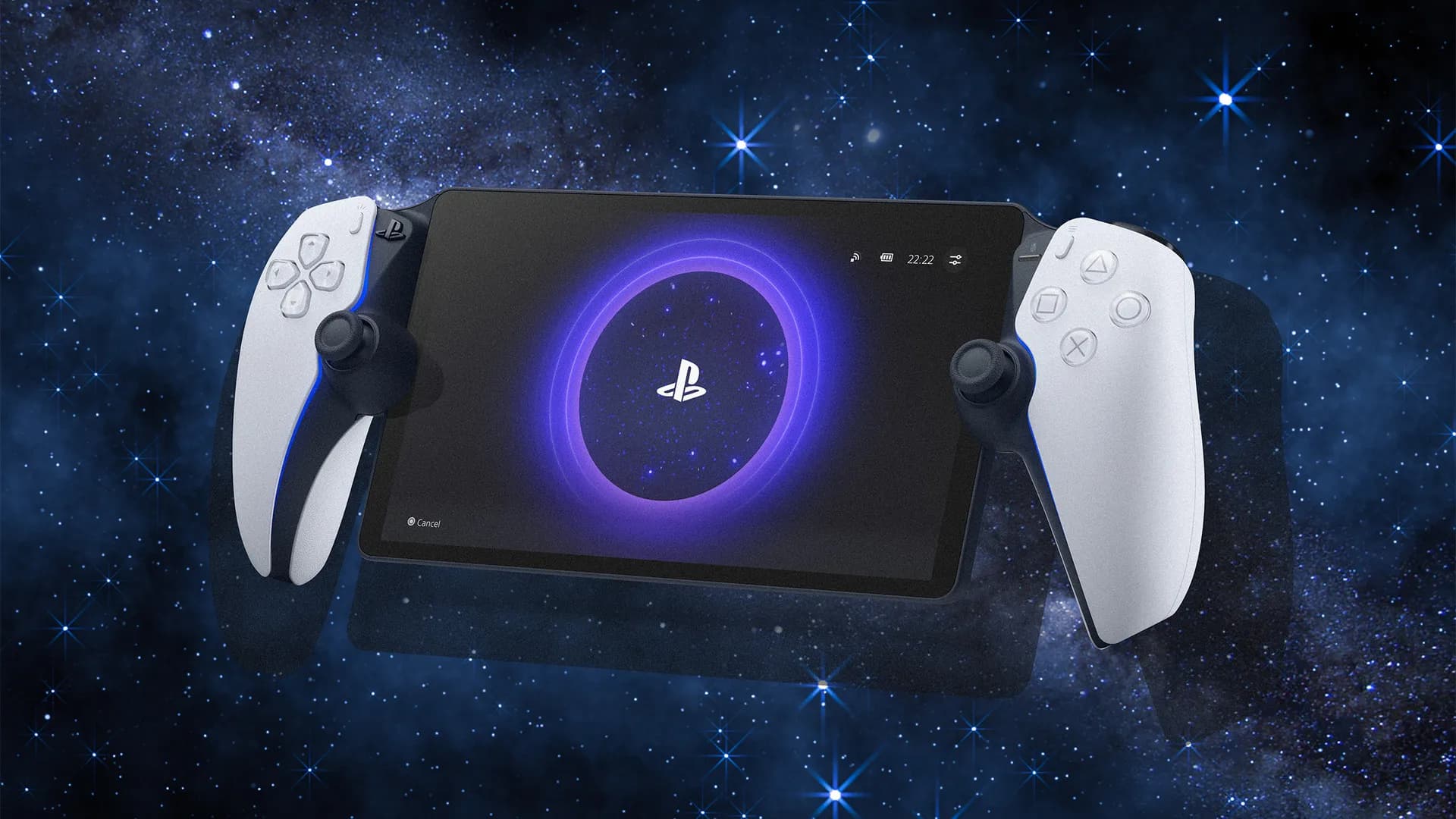
Sony’s latest update for the PlayStation Portal has reignited an ongoing debate among PlayStation fans: is remote play enough, or does Sony need to return to making a true handheld console? While the update introduces meaningful improvements to the Portal’s performance and usability, it also highlights the device’s fundamental limitation—its complete reliance on a PlayStation 5 and a stable internet connection. The PlayStation Portal was never marketed as a standalone handheld. Instead, Sony positioned it as a companion device designed to stream PS5 games over Wi-Fi using Remote Play.
At launch, this concept drew mixed reactions. Some players welcomed a dedicated remote play device with DualSense features, while others criticized the Portal for lacking native gameplay, cloud gaming support, or offline functionality. The latest update does little to change that perception, even as it improves the experience for existing users.
According to Sony, the new update focuses on stability, latency reduction, and improved connection handling across different network environments. Many users have already reported smoother performance, fewer disconnects, and better image clarity—especially when playing outside of ideal home network conditions. These improvements show that Sony is committed to refining the Portal, and they demonstrate the company’s technical expertise in remote streaming.
However, the update also underscores a larger issue: no matter how refined the streaming experience becomes, the PlayStation Portal remains fundamentally constrained by its design. Unlike handheld gaming systems such as the Nintendo Switch or Steam Deck, the Portal cannot function independently. Without a PS5 running the game and a reliable internet connection, the device becomes unusable.
This limitation feels increasingly outdated in a market where portable gaming has surged in popularity. The success of the Nintendo Switch proved that players value flexibility, local play, and portability. Valve’s Steam Deck further expanded expectations by offering a powerful handheld PC capable of running games natively, offline, and on the go.
Even Microsoft has leaned heavily into cloud gaming to support mobile play across devices. Against this backdrop, Sony’s approach feels cautious—perhaps too cautious. The PlayStation brand has a strong history with handheld consoles.
The PlayStation Portable (PSP) was a massive success, selling over 80 million units worldwide and offering console-quality gaming on the go long before it became common. Its successor, the PlayStation Vita, struggled commercially but was widely praised for its hardware, OLED screen, and strong library of indie and first-party titles. Many fans still regard the Vita as a system ahead of its time, held back by limited support rather than lack of potential.
The PlayStation Portal’s latest update unintentionally revives nostalgia for those devices. By improving the Portal’s responsiveness and comfort, Sony demonstrates it can still design excellent handheld hardware. What’s missing is the ambition to let that hardware stand on its own.
Players are not just asking for better remote play—they’re asking for a device that can download games, run them locally, and travel anywhere without compromises. Sony’s current strategy appears focused on protecting the PS5 ecosystem rather than expanding it. By requiring a PS5 for Portal usage, the company ensures that the console remains central to the PlayStation experience.
While this makes sense from a business standpoint, it limits the Portal’s appeal to a niche audience of existing PS5 owners with strong internet connections. The latest update may satisfy current users, but it is unlikely to convert skeptics. In fact, it may strengthen the argument that Sony should invest in a true handheld console once again—one that blends local processing with optional cloud and remote play features.
Such a device could complement the PS5 rather than depend on it, offering players more freedom without sacrificing performance. As portable gaming continues to evolve, Sony risks falling behind if it treats handheld play as a secondary feature rather than a core platform. The PlayStation Portal update proves that Sony can improve the experience, but it also makes one thing clear: fans don’t just want a better accessory.
They want a real PlayStation handheld again. Whether Sony chooses to listen remains to be seen, but the demand has never been more obvious..