





politics • Feb. 17, 2026
Trump says Board of Peace will unveil $5 billion in Gaza reconstruction pledges at inaugural meeting
Donald Trump announced that the newly proposed Board of Peace will unveil $5 billion in Gaza reconstruction pledges at its inaugural meeting. The initiative aims to mobilize global funding and coordinate rebuilding efforts amid ongoing humanitarian concerns.

By Victor V. Haley
Published Feb. 17, 2026
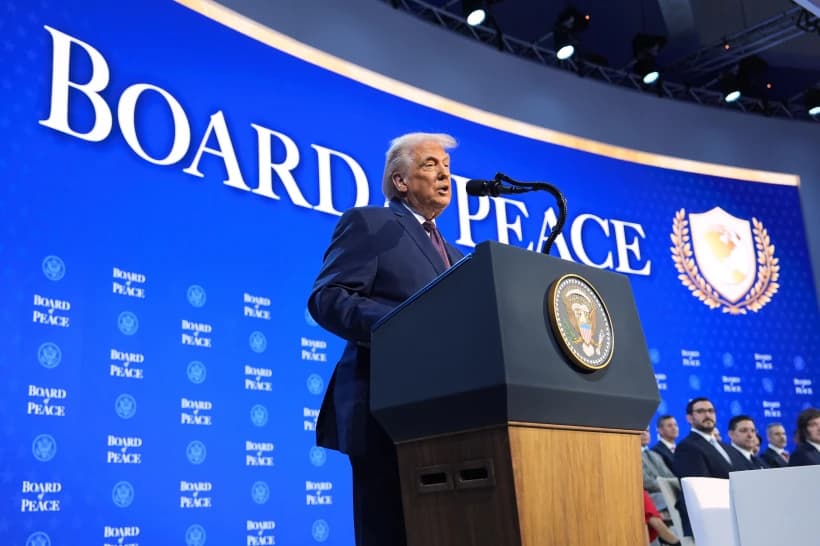
Former U.S. President Donald Trump announced that a newly proposed international body, referred to as the Board of Peace, is expected to unveil approximately $5 billion in reconstruction pledges for Gaza during its inaugural meeting, a development he described as a major step toward stabilizing the region and addressing the severe humanitarian crisis caused by months of conflict and destruction. According to the announcement, the Board of Peace is envisioned as a coordination platform bringing together governments, private donors, international organizations, and financial institutions to accelerate rebuilding efforts in Gaza, where large sections of infrastructure, housing, healthcare facilities, water systems, and power networks have been damaged or destroyed.
Trump stated that the pledged funds would focus on immediate humanitarian relief as well as long-term reconstruction priorities, including rebuilding homes, restoring electricity and clean water access, rehabilitating hospitals and schools, and supporting economic recovery initiatives aimed at creating jobs and restoring local business activity. The initiative, he said, is intended to ensure that reconstruction funding is managed efficiently, transparently, and in a way that prevents diversion of resources while prioritizing civilian needs and regional stability. The proposed Board of Peace is also expected to work closely with regional partners in the Middle East, international aid agencies, and development banks to create a structured framework for project approval, oversight, and implementation, addressing longstanding concerns about coordination gaps and delays that have affected previous reconstruction efforts in Gaza following earlier conflicts.
Trump emphasized that the inaugural meeting will not only present the initial $5 billion in commitments but will also serve as a platform to attract additional pledges from countries and private sector partners, with the long-term goal of significantly expanding the funding pool to meet the extensive rebuilding needs estimated by humanitarian and development organizations. Analysts note that reconstruction in Gaza will require tens of billions of dollars over multiple years due to the scale of destruction, displacement, and economic collapse experienced by the population, making sustained international engagement essential beyond the initial funding round. The announcement comes at a time when humanitarian agencies continue to warn about urgent shortages of shelter, medical supplies, food, and clean water, as well as the need for rapid restoration of essential services to prevent further deterioration in living conditions.
Trump framed the initiative as part of a broader effort to promote stability and reduce the risk of renewed conflict by improving economic and living conditions, arguing that large-scale reconstruction and economic opportunity could contribute to long-term peace if implemented effectively and supported by strong oversight mechanisms. However, the proposal is likely to face political, logistical, and diplomatic challenges, including questions about governance structures, the role of existing international bodies, coordination with Palestinian authorities, security conditions on the ground, and the willingness of donor countries to commit additional funds amid competing global crises and budget pressures. Experts also point out that reconstruction efforts in Gaza are closely tied to broader political and security dynamics in the region, meaning that funding alone may not guarantee successful implementation without sustained ceasefire arrangements, access for materials and personnel, and clear administrative frameworks.
The concept of a centralized Board of Peace reflects growing international interest in creating more unified mechanisms for post-conflict recovery, particularly in complex environments where multiple actors are involved and accountability concerns are high. Supporters of the approach argue that a single coordinating body could reduce duplication, improve transparency, and ensure that projects align with long-term development goals rather than short-term emergency responses alone. Critics, however, may question the structure, leadership, and political implications of the initiative, especially given the sensitivity surrounding governance and sovereignty issues in Gaza and the broader Israeli-Palestinian context.
The inaugural meeting is expected to include representatives from donor governments, financial institutions, humanitarian organizations, and potentially regional stakeholders, with discussions focused on priority sectors, implementation timelines, monitoring mechanisms, and strategies for scaling up investment over time. Trump indicated that the Board of Peace would emphasize measurable outcomes, including the number of homes rebuilt, infrastructure restored, and jobs created, as part of its accountability framework designed to reassure donors and encourage continued financial participation. In addition to physical reconstruction, the initiative is expected to explore programs supporting small businesses, workforce development, and community recovery efforts aimed at restoring economic self-sufficiency and reducing long-term dependency on humanitarian aid.
Observers note that successful reconstruction in Gaza will require not only funding but also reliable supply chains, border access arrangements, coordination with local authorities, and safeguards to ensure that materials are used for civilian purposes. The announcement has drawn attention from policymakers and humanitarian groups, many of whom stress that rapid mobilization of resources is critical but must be accompanied by inclusive planning that reflects the needs of affected communities and ensures equitable distribution of assistance. As preparations continue for the inaugural meeting, the $5 billion pledge announcement is being viewed as an initial signal of international willingness to engage in Gaza’s recovery, though the ultimate impact will depend on how quickly funds are disbursed, how effectively projects are implemented, and whether the initiative can maintain long-term donor confidence.
The coming months are expected to reveal more details about the governance structure, participating members, funding mechanisms, and operational strategy of the Board of Peace, as well as its relationship with existing international reconstruction frameworks. While the proposal represents a significant financial commitment at an early stage, experts emphasize that rebuilding Gaza will be a complex, multi-year process requiring sustained political support, security stability, and coordinated international involvement to translate pledges into tangible improvements in living conditions for millions of residents affected by the conflict..