





business • Dec. 26, 2025
Switzerland Shifts to Zero Interest Rates
A recap of President Trump’s aggressive 2025 tariff actions that sparked global trade wars and disrupted international commerce.

By Jacqueline L. Wood
Published Dec. 26, 2025
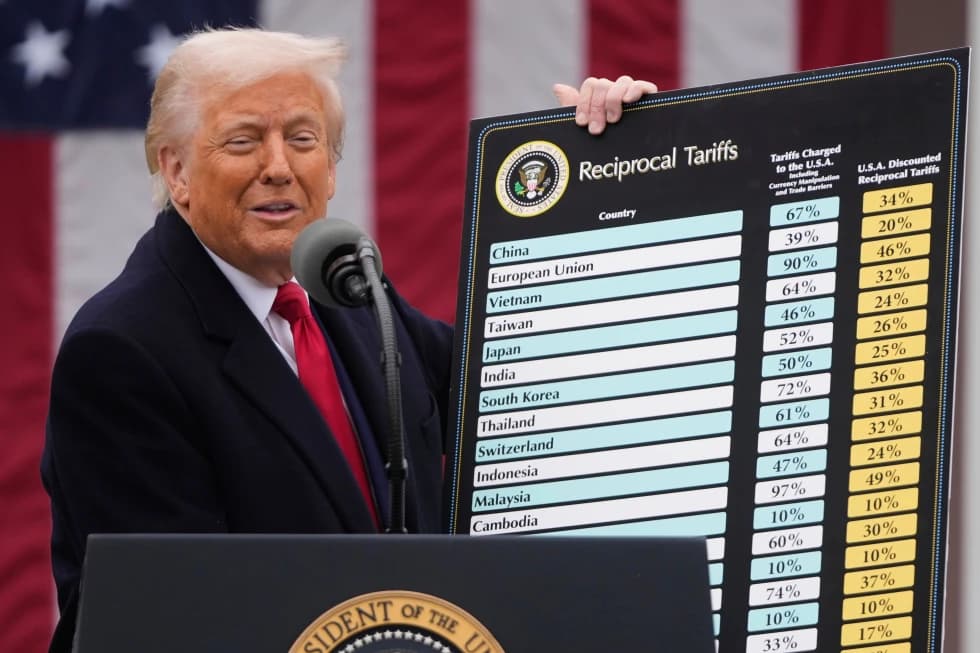
In 2025, President Donald Trump dramatically reshaped U.S. trade policy by launching a series of sweeping tariff actions that plunged the United States into a barrage of global trade wars with virtually every major economy, starting early in his term when he imposed significant new tariffs on Canada, Mexico, and China and escalating throughout the year as he expanded duties on a wide array of imports and introduced sweeping “reciprocal” levies designed to pressure trading partners into concessions on what he described as unfair trade practices, leading to erratic policy shifts that created widespread uncertainty for businesses and markets around the world; his administration’s tariff campaign included heightened import taxes on steel and aluminum that were raised substantially beyond previous levels, auto tariffs that unsettled the North American automotive industry, punitive duties on a broad range of goods from dozens of countries, and blanket tariffs tied to economic or geopolitical conditions, all of which provoked tit‑for‑tat retaliation from affected nations and strained diplomatic relations, with trading partners such as Canada and Mexico fiercely contesting the legality of U.S. measures and implementing their own counter‑tariffs on American products, while China engaged in an intense exchange of levies that saw peak retaliation rates soar and tensions between the two largest economies further intensify in a cycle of escalation and negotiation; the unpredictability of the tariff announcements saw some duties imposed, then suspended or altered shortly thereafter, adding to the complexity faced by global supply chains as companies struggled to plan production and sourcing amid rapidly changing trade costs and regulatory environments, and prompting legal challenges in U.S.
courts over the executive branch’s authority to enact such broad levies under emergency powers, with lower courts at times blocking certain tariffs only to have appeals reinstate them pending review, pushing the matter toward the Supreme Court; throughout the year Trump and his allies argued that higher tariffs would help narrow the U.S. trade deficit, stimulate domestic manufacturing, and generate significant revenue for the Treasury, with the president at one point even suggesting a potential dividend to American households funded by tariff receipts, but critics and many economists warned that the measures incurred higher costs for U.S. consumers and businesses as importers passed on tariff burdens, contributed to inflationary pressures on essential goods, disrupted long‑established trade relationships, and risked undermining broader economic growth, all while global markets reacted with volatility as investors digested policy announcements and the prospects of prolonged trade friction, highlighted by sharp swings in major stock indices during key tariff episodes; in addition to the bilateral disputes, the expansive tariff regime challenged long‑standing multilateral trade norms, drawing criticism from allies and adversaries alike and prompting discussions over whether established trade agreements such as the United States–Mexico–Canada Agreement had been violated, with Canada accusing the U.S.
of breaching the terms of the pact and threatening broader retaliatory measures, and other nations in Europe, Asia, and Latin America contemplating or enacting their own duties on U.S. exports in response, deepening fractures in the global trading system and increasing the risk of a broader economic slowdown; supply chain disruptions became a common theme as manufacturers and exporters sought to reroute goods to avoid punitive tariffs, sometimes shifting production to countries with more favorable trade terms or investing in local manufacturing capacity, while sectors heavily reliant on global inputs faced mounting cost pressures that fed through to end prices for consumers, affecting industries from automotive and electronics to agriculture and metals; beyond economic considerations, 2025’s tariff wars had geopolitical ramifications as trade policy intersected with broader strategic competition, including concerns over national security that factored into certain tariff decisions, and debates over the appropriate balance between protecting domestic industries and maintaining cooperative international economic relationships, all underscored by a backdrop of inconsistent messaging from the U.S. administration that at times signaled willingness to negotiate tariff reductions or trade deals even as additional levies were threatened or imposed; as the year drew to a close, the cumulative effect of the tariff campaign was a world economy marked by heightened barriers to trade, elevated uncertainty for multinational firms, diplomatic unease among longstanding allies, and an ongoing struggle to define the future of global commerce in the face of aggressive unilateral trade actions, prompting analysts and policymakers alike to weigh the long‑term consequences of America’s 2025 tariff wars for international economic integration, domestic competitiveness, and the stability of the global trading system..